
How to Check Legal Opinion for Property in Tamil Nadu: A Professional Civil Lawyer's Guide to Document Verification
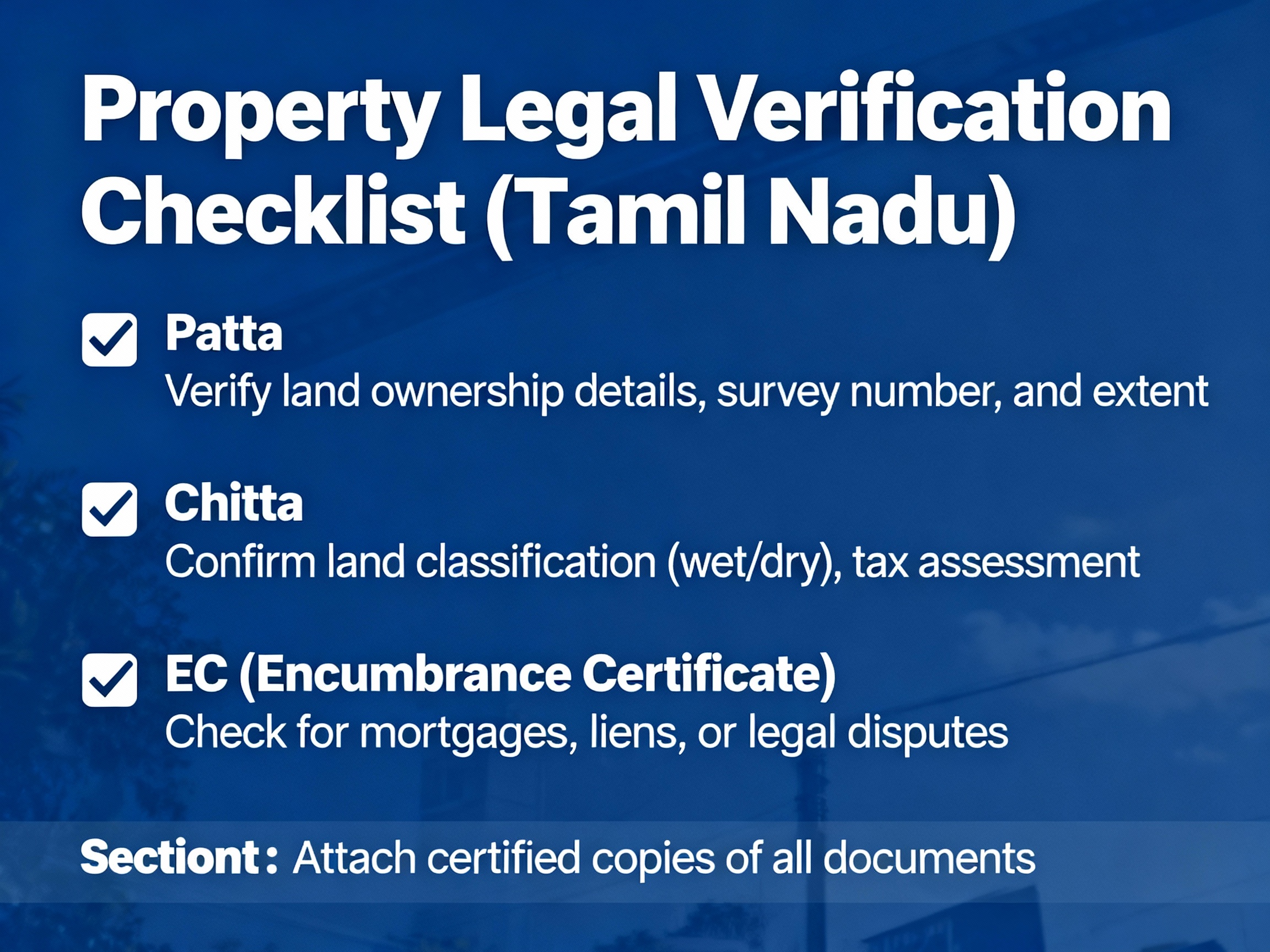
Understanding Property Legal Verification in Tamil Nadu
Property legal verification is the systematic process of confirming that a property is free from legal troubles, encumbrances, and disputes, and that the seller holds legitimate ownership rights. This crucial due diligence step examines title deeds, revenue records, transaction history, and regulatory approvals to establish a clear and marketable title.
In Tamil Nadu's dynamic real estate market, where digital land records have been implemented alongside traditional documentation systems, professional verification has become both more accessible and more essential. The Tamil Nadu government maintains comprehensive land records through various departments including the Revenue Department, Registration Department, and Town and Country Planning authorities. These records, now largely digitized and accessible through portals like Tamil Nadu e-Services and TNREGINET, form the foundation of property verification.
However, as recent audits have flagged, large-scale errors exist in digitized land records. This makes professional verification skills more critical than ever before.
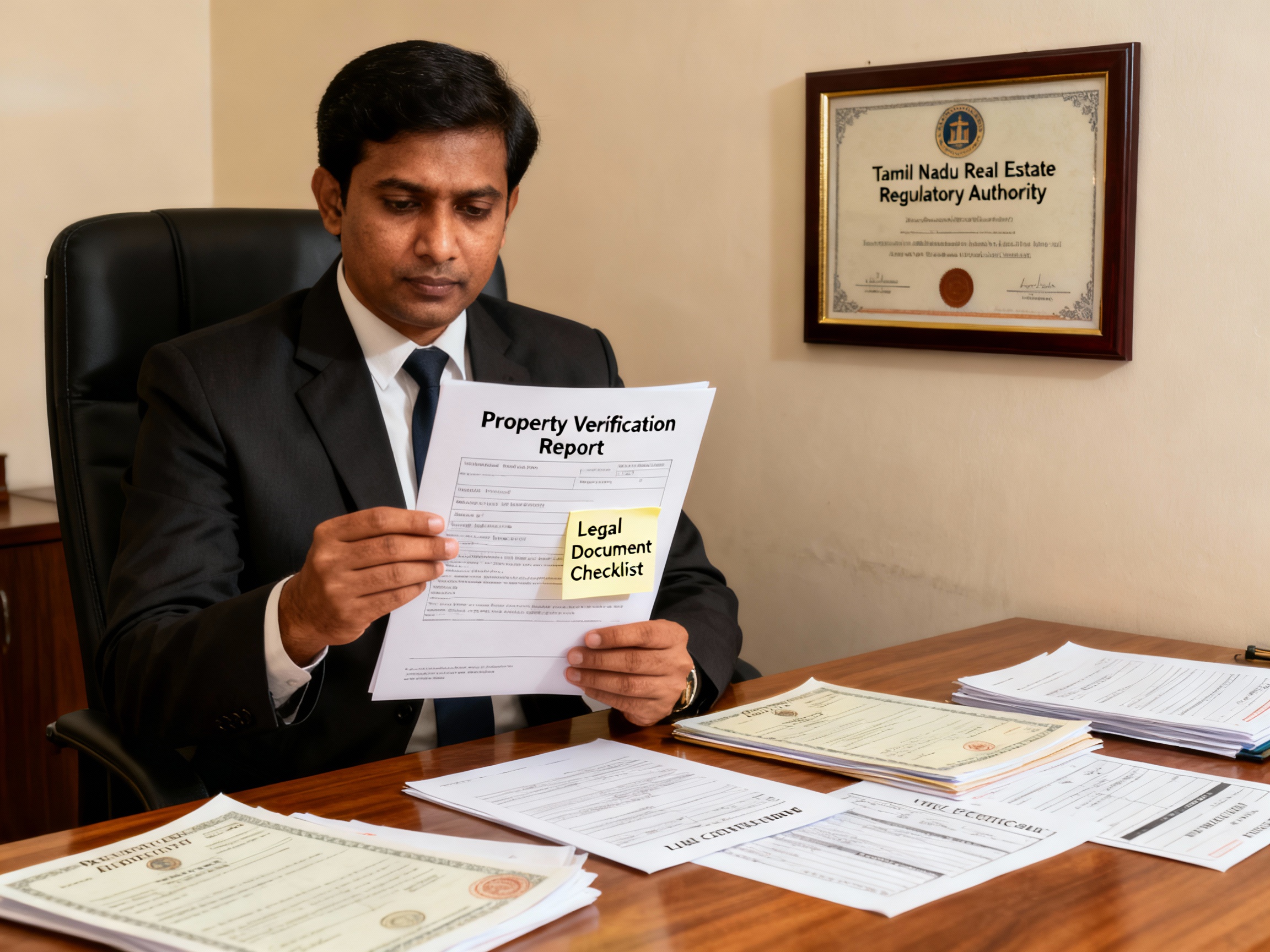
Essential Documents for Property Verification
Before diving into the verification process, understanding the complete documentation landscape is fundamental. Civil lawyers examining property titles in Tamil Nadu review a comprehensive set of documents that establish ownership, usage rights, transaction history, and regulatory compliance.
📋 Ownership and Revenue Documents
📄 Transaction and Legal Documents
✅ Regulatory Approval Documents
Step 1: Reading and Verifying Patta Chitta Documents
The Patta Chitta verification process serves as the starting point for property legal opinion in Tamil Nadu. Since the 2015 merger of these documents, understanding how to access, read, and verify Patta Chitta has become streamlined through the Tamil Nadu e-Services portal, yet critical verification skills remain essential.
🌐 Accessing Patta Chitta Online
🔍 Critical Elements to Verify in Patta Documents
| Element to Verify | What to Check | Red Flags |
|---|---|---|
| Owner's Name | Must exactly match seller's name on agreement | Spelling variations, initials mismatch, completely different names |
| Survey Number | Must match sale deed and FMB sketch exactly | Discrepancies between Patta, sale deed, and FMB |
| Land Extent (Area) | Should match across all documents | Unexplained variations, area larger/smaller than sale deed |
| Land Classification | Verify wet (Nanjai) or dry (Punjai) classification | Classification doesn't match actual land condition |
| Subdivision Details | Check if property is part of larger survey or divided | Unclear subdivision, mismatch with FMB |
⚡ Common Patta Issues and Resolution Steps
Issue 1: Patta Shows Previous Owner's Name
This typically means the mutation (Patta transfer) hasn't been completed after purchase. Solution involves:
- Apply for Patta Transfer at Taluk Office or online through Tamil Nilam portal (tamilnilam.tn.gov.in)
- Submit registered sale deed, Encumbrance Certificate, identity proofs, and property tax receipts
- Village Administrative Officer will verify documents and may conduct site inspection
- Process typically takes 15-30 working days
Issue 2: Patta Name Spelling Mistakes or Initial Errors
This can be corrected through a simple process:
- Submit written request to VAO or Taluk Officer with ID proof showing correct name
- Attach Patta copy and sale deed
- Correction is made in A-Register after local verification
Issue 3: Patta-Village Mismatch
When Patta shows one village but land physically lies in another, this is a serious issue rendering the Patta legally invalid for that land:
- Verify actual land location with survey map and FMB sketch
- File petition with Tahsildar for correction with supporting documentation
- Escalate to Revenue Divisional Officer (RDO) if no action taken
- Seek civil court orders for complex disputes
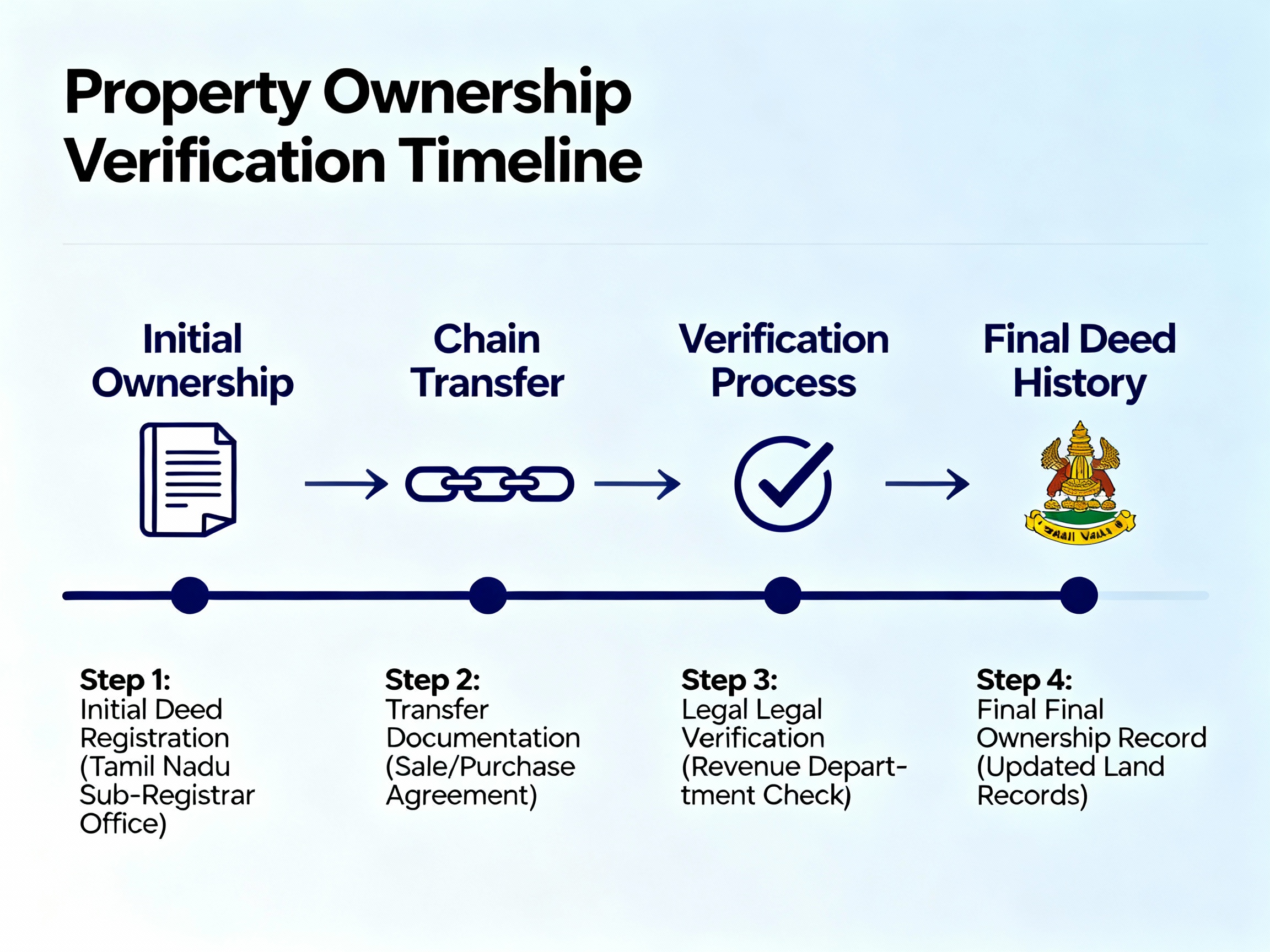
Step 2: Understanding and Checking the Encumbrance Certificate (EC)
The Encumbrance Certificate represents the most critical document in property verification, providing a comprehensive transaction history that reveals the property's legal and financial status. Civil lawyers consider the EC the backbone of title verification.
📊 What the Encumbrance Certificate Reveals
- Complete property transaction history for specified period (typically 13-30 years or more)
- Legal status verification (free from mortgages, liens, or litigation)
- Ownership chain documentation (all registered property transfers)
- Financial encumbrance details (loans, mortgages, leases)
🔑 Information Contained in Tamil Nadu EC
Property Identification Details:
- Complete survey numbers and village/town name
- EC search period (start and end dates)
- Sub-Registrar Office jurisdiction
Transaction History Information:
- Document registration numbers (unique identifiers for each transaction)
- Registration dates (execution, presentation, and registration)
- Transaction types (sale deed, settlement deed, mortgage deed, lease deed, release deed)
- Party details (names of sellers/executants and buyers/claimants)
- Property values (consideration amount and government guideline value)
- Registration book references (volume and page numbers)
Property Description Elements:
- Property classification (house site, agricultural land, residential building, commercial)
- Property measurement (area in square feet, acres, cents, or grounds)
- Boundary details (four-side boundary description)
- Door numbers for urban properties (old and new)
- Undivided share details for apartment properties
🌐 How to Obtain EC Online in Tamil Nadu
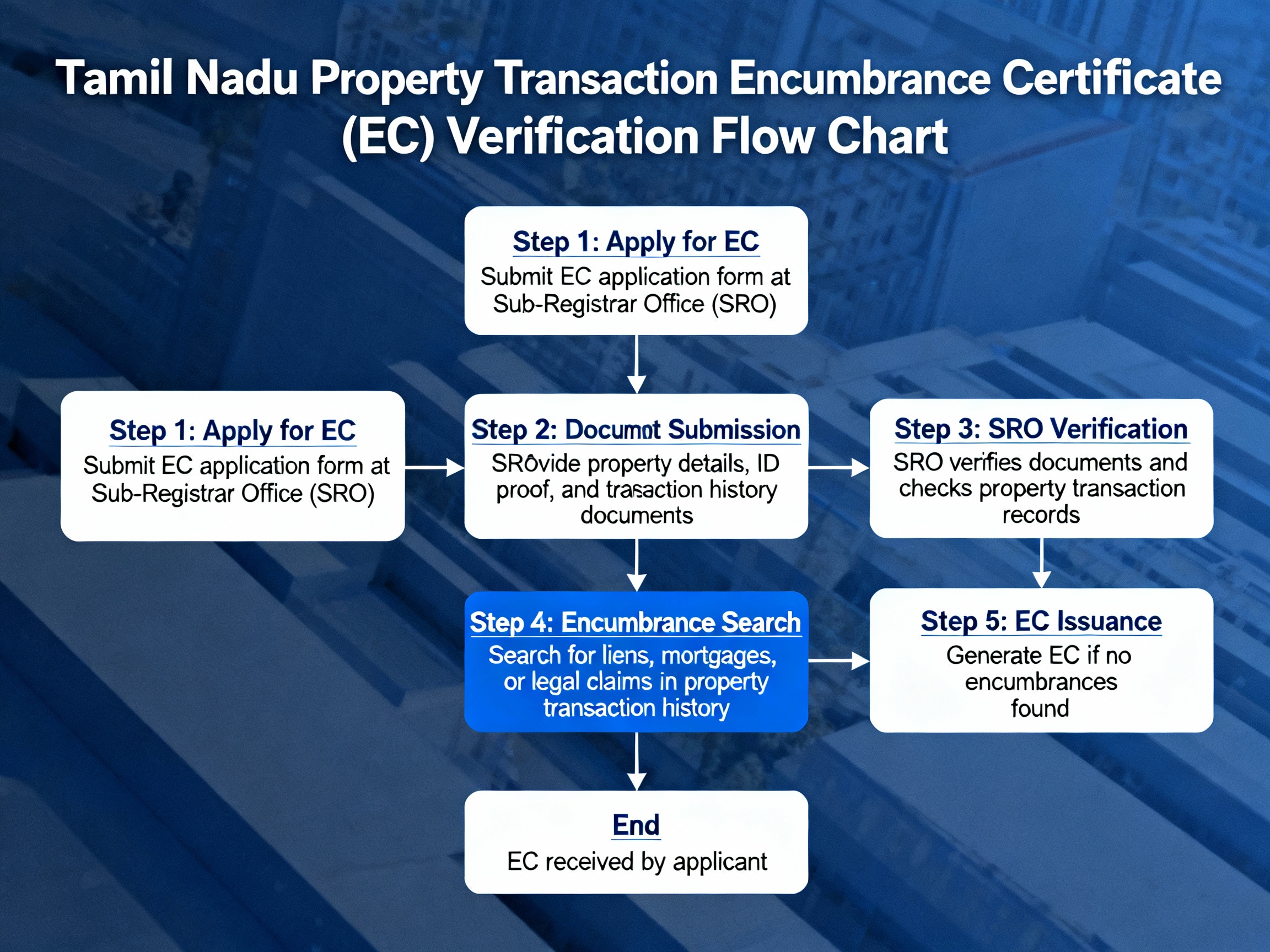
✅ The EC Verification Flow: 15 Critical Steps
These are the professional-level steps that civil lawyers follow:
| Step | Action | What to Check |
|---|---|---|
| 1 | Obtain EC for 30 years minimum | Get EC from earliest available date to current date |
| 2 | Verify search period coverage | Check dates cover adequate period (minimum 30 years) |
| 3 | Match property details | Cross-check Survey Number, Village, Taluk with sale deed |
| 4 | Trace ownership chain | Follow transaction sequence from oldest to newest |
| 5 | Identify transaction types | Note Sale, Mortgage, Gift, Partition, Lease deeds |
| 6 | Check for mortgages | Look for any mortgage deed registrations |
| 7 | Verify releases | For every mortgage, check if release deed exists |
| 8 | Look for litigation | Check for court case numbers or legal dispute mentions |
| 9 | Verify current owner | Last transaction should show seller's name |
| 10 | Check extent consistency | Land area should remain same or properly divided |
| 11 | Identify partitions | If property divided, check partition deeds |
| 12 | Cross-verify with Patta | EC ownership should match current Patta holder |
| 13 | Check registration details | Verify book number, page number, SRO office |
| 14 | Look for settlements | Family settlements should have all legal heirs |
| 15 | Final clearance | Ensure current EC shows no encumbrances |
🚩 Common EC Red Flags and Solutions
Red Flag 1: Unreleased Mortgages
EC shows mortgage deed but no release deed = SERIOUS ISSUE
- Contact bank/lender who gave the mortgage
- Obtain loan closure certificate and clearance letter
- Get release deed registered at Sub-Registrar Office
- Obtain fresh EC showing the release
- Do NOT proceed with purchase until cleared
Red Flag 2: Missing Ownership Chain
Gaps exist in EC ownership history with transactions missing
- Obtain EC for maximum period available
- Collect all available parent deeds from sellers
- Get affidavits from previous owners explaining gaps
- Obtain legal opinion from experienced advocate
- May need indemnity bond for minor gaps
- Avoid if gaps too large or unexplained
Red Flag 3: Court Litigation References
EC mentions pending or past court cases = DEAL BREAKER
- Obtain court case details and number
- Check case status at court
- Review court orders and injunctions
- Consult advocate about litigation risk
- Absolutely avoid if serious ongoing litigation exists
Step 3: Verifying FMB Sketch and Boundary Details
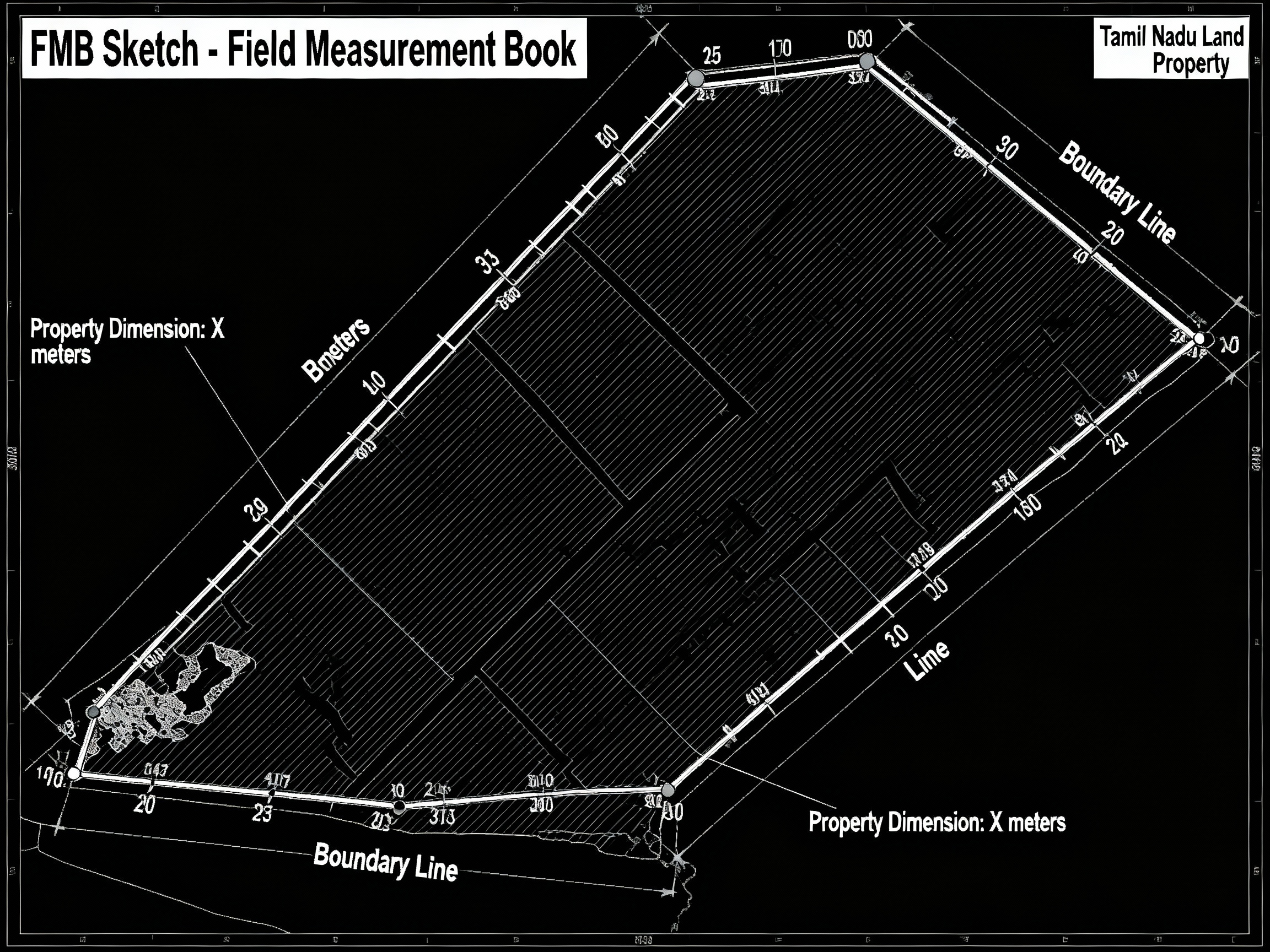
The Field Measurement Book (FMB) sketch serves as the official survey document that provides the exact physical representation of land boundaries, measurements, and adjacent properties. Professional civil lawyers rely on FMB verification to prevent boundary disputes, encroachment issues, and measurement fraud.
📐 Understanding the FMB Sketch
The FMB is an official document maintained by the Revenue Department of Tamil Nadu, containing hand-drawn or digital maps showing exact boundaries and measurements of land parcels. It includes:
- Plot dimensions: Precise measurements of each side
- Survey numbers: Identifying the specific land parcel
- Adjoining plot details: Neighboring properties and their survey numbers
- Orientation markers: North, South, East, and West directions
- Scale measurements: For accurate representation
- Physical features: Pathways, water bodies, roads if present
🌐 How to Obtain FMB Sketch Online
✅ Critical FMB Verification Steps
| Verification Step | What to Do | Why It Matters |
|---|---|---|
| Cross-reference with Sale Deed | Ensure measurements match; note even minor discrepancies of a few feet | Indicates encroachment or fraud |
| Physical Site Verification | Visit site with sketch, identify boundary markers, measure major dimensions | Confirms boundaries match actual ground reality |
| Verify Adjacent Properties | Check neighboring survey numbers match actual neighbors; talk to them about boundaries | Identifies potential boundary disputes with neighbors |
| Match with Other Documents | Ensure survey number, subdivision, and extent match Patta and Chitta | Consistency confirms document authenticity |
⚡ Common FMB Issues and Resolutions
Issue 1: Measurement Mismatches
FMB dimensions don't match sale deed area = POTENTIAL FRAUD
- Request fresh survey from Revenue Department's survey wing
- Compare FMB with physical boundaries using licensed surveyor
- Check with neighbors about agreed boundaries
- File application for FMB correction if genuine error exists
- May require boundary dispute resolution through revenue authorities or courts
- Get professional surveyor's report for serious discrepancies
Issue 2: Boundary Encroachment
Neighbors have built structures crossing into your property boundaries
- Compare FMB sketch with physical site conditions carefully
- Engage licensed surveyor to mark exact boundaries per FMB
- Talk to neighbors with documents to resolve amicably if possible
- File complaint with Revenue Inspector for official intervention
- May require civil suit if not resolved through revenue authorities
- Get police complaint filed if encroachment is willful and threatening
Step 4: Checking Adangal (A-Register) and Land Classification
The Adangal, also known as the A-Register or Village Account No. 2, provides crucial information about land cultivation, usage patterns, and tax assessment that complements ownership records. Civil lawyers examine Adangal to verify land classification consistency and identify any discrepancies with Patta records.
📖 What Adangal Contains
- Survey number and extent: Specific land parcel identification and total area
- Land classification: Patta lands, wet or dry, Manavari (rain-fed), wastelands, or Poramboke (government-owned)
- Owner's name: References the Chitta document showing who possesses the land
- Cultivation details: Types of crops grown, tenancy information, annual patterns
- Tax assessment: Annual land revenue payable and assessment figures
🌐 How to Access Adangal Online
✅ Critical Verification Points in Adangal
| Verification Point | What to Check | Red Flags |
|---|---|---|
| Survey Number | Must exactly match Patta, FMB, and sale deed | Mismatch indicates documentation errors |
| Land Extent | Area in Adangal must match other documents | Variations suggest encroachment or subdivision issues |
| Classification | Land classification aligns with Patta and actual condition | Discrepancies affect property value and usage permissions |
| Current Possession | Should show rightful owner or authorized cultivator | Someone else shown suggests encroachment or tenancy disputes |
Step 5: Verifying DTCP/CMDA Approvals for Layouts
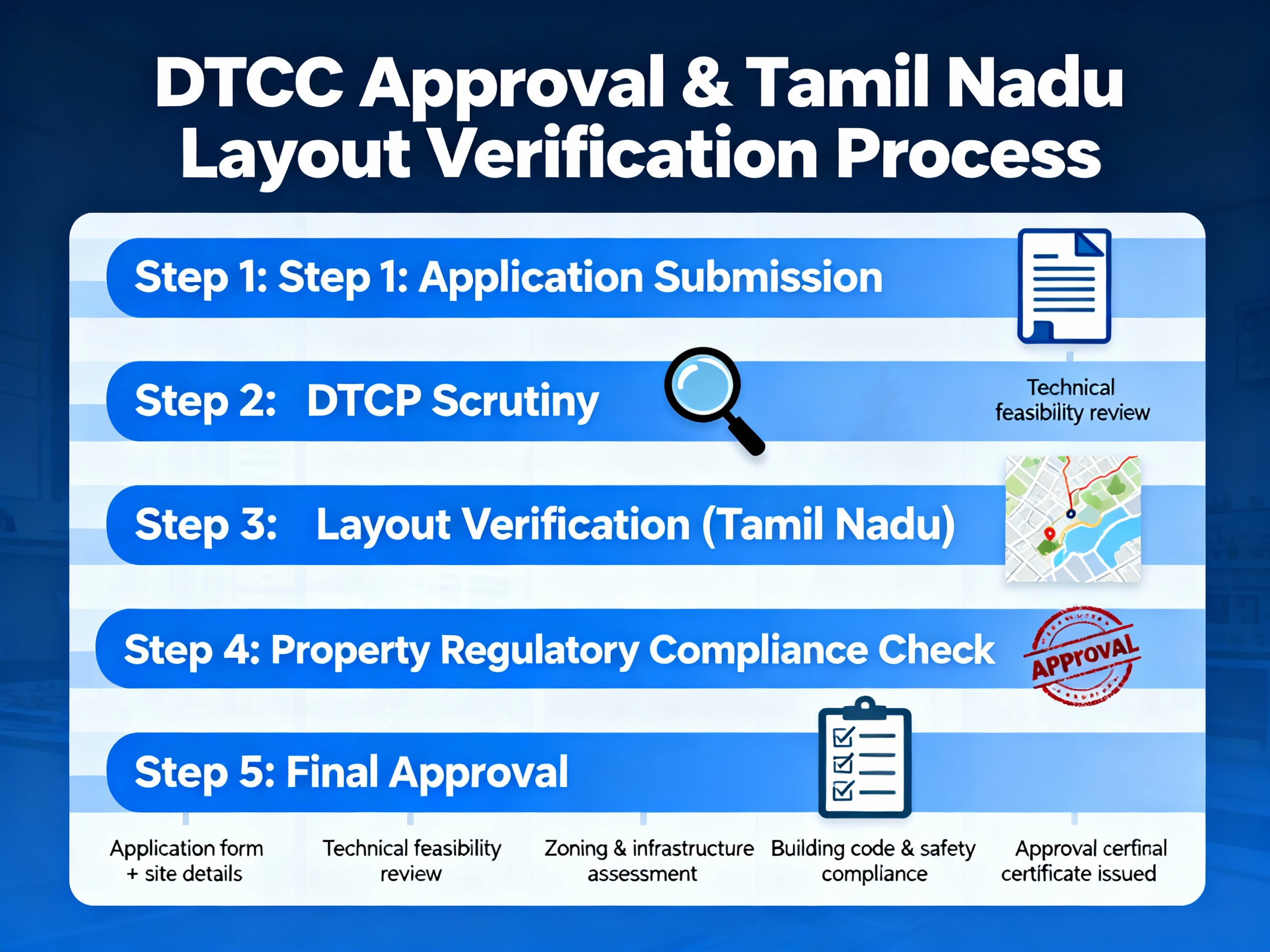
For properties in approved layouts or developed areas, verification of Directorate of Town and Country Planning (DTCP) or Chennai Metropolitan Development Authority (CMDA) approval is mandatory to ensure legal compliance and avoid future complications.
🏗️ Understanding DTCP and CMDA Jurisdiction
DTCP Approval: Required for layouts and developments in areas outside Chennai Metropolitan Area, covering most of Tamil Nadu's suburban and rural regions. Ensures compliance with zoning regulations, infrastructure standards (roads, drainage, electricity), environmental guidelines and clearances, and building regulations.
CMDA Approval: Applies specifically to properties within Chennai Metropolitan Area limits, governing urban planning and development within the city.
🌐 How to Check DTCP Approval Online
✅ Critical Elements to Verify in DTCP Approval
| Element | Verification Method | Importance |
|---|---|---|
| Approval Number | Confirm through official DTCP website; fake numbers are common fraud | CRITICAL - Prevents fake approval fraud |
| Approval Validity | Check if approvals have time limits; some require renewal | Expired approvals may need re-approval or renewal |
| Survey Numbers | Verify your specific survey number falls within approved area | Ensures legal compliance and zoning adherence |
| Layout Plan | Review roads, amenities, plot dimensions, common areas | Confirms infrastructure matches what's being sold |
| Infrastructure | Verify roads, drainage, water supply, electricity provided | Ensures essential amenities are available |
⚡ Common DTCP Issues and Solutions
Issue 1: Unapproved Layouts Being Sold as Approved
- Check DTCP website directly, don't rely on seller's documents alone
- Visit local DTCP office if online verification is unclear
- Absolutely avoid purchase of unapproved layouts
Issue 2: Expired or Invalid Approvals
- Check the approval validity period
- Determine if renewal is possible
- Consult with DTCP authorities about regularization options
Issue 3: Mismatched Survey Numbers
- Verify exact survey numbers in DTCP approval order
- Check if property is outside approved layout boundary
- This is a SERIOUS RED FLAG requiring immediate clarification
Step 6: Addressing Double Entry and Document Fraud Issues
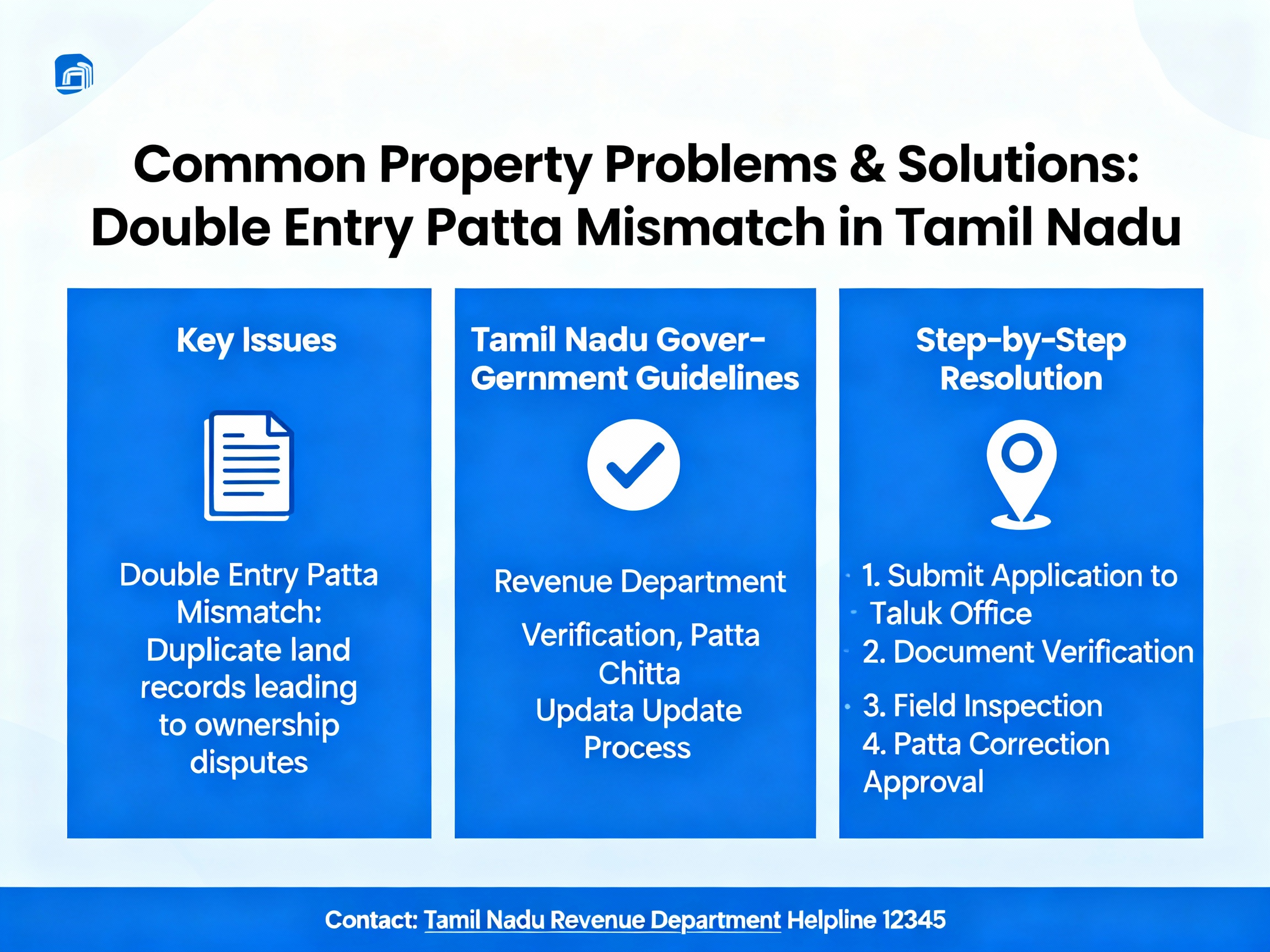
Double registration or double entry issues, where the same property is registered under two different sale deeds, represent one of the most serious property fraud scenarios in Tamil Nadu. Understanding detection and resolution mechanisms is crucial for protection.
🚨 What is Double Registration
Double registration occurs when the same property gets registered under two different sale deeds, often to different buyers. This typically results from:
- Deliberate fraud by the seller
- Clerical errors at the Sub-Registrar Office
- Malicious intent to defraud multiple buyers
🔍 How to Detect Double Entry Issues
⚖️ Legal Remedies for Double Registration
When fraud is detected, follow these steps:
- Consult Property Lawyer: Immediately get legal advice from experienced title dispute lawyer
- File Complaint: Lodge complaint with Sub-Registrar's Office highlighting duplicate registration
- Police FIR: If fraud suspected, lodge FIR with police for criminal investigation
- Civil Suit: File suit for cancellation of fraudulent sale deed or declaration suit to assert legal ownership
- Court Considerations: Courts consider who took possession first, who paid consideration, evidence of intention to transfer ownership, and whether fraud/misrepresentation occurred
✅ Preventing Double Entry Problems
- Always obtain and scrutinize EC for maximum period available before signing agreement
- Verify physical possession and ensure seller has actual control of property
- Check seller credentials thoroughly (identity proofs, address verification, background)
- Insist on registered sale agreements with proper stamp duty payment
- Take immediate possession after registration with photographic documentation
- Register sale deed promptly without delays
- Consider title insurance for high-value properties
Step 7: Solving Patta Not Linked Property Issues
Properties without proper Patta linkage present significant legal and practical challenges that must be resolved before purchase.
❓ Why Patta May Not Be Linked to Property
| Reason | Description | Risk Level |
|---|---|---|
| New Subdivisions | Larger survey subdivided but new Patta not issued for smaller plots | MEDIUM - Can be corrected |
| Property Under Dispute | Patta transfer applications rejected or pending due to litigation | HIGH - Avoid purchase |
| Government Land | Poramboke or government land sold fraudulently without conversion | CRITICAL - Illegal transaction |
| Inherited Properties | Patta not transferred after original owner's death | MEDIUM - Requires mutation |
🔍 How to Verify if Land is Government Poramboke
📝 Steps to Apply for New Patta
When legitimate private ownership exists but Patta is missing:
Required Documents:
- Registered sale deed proving your ownership
- Encumbrance Certificate showing clear title
- Property tax receipts if available
- Identity proofs and address proof
- Survey documents including FMB sketch
⚠️ Precautions Before Buying Property Without Patta
- Never purchase land shown as Poramboke or government land from private parties
- Verify why Patta doesn't exist by investigating complete history through revenue records
- Check if land is forest land, CRZ, or restricted area where private ownership is prohibited
- Consult experienced property lawyer before proceeding with property lacking Patta documentation
- Consider walking away if seller cannot provide satisfactory explanation and documentation
Step 8: Professional Legal Opinion Process
Obtaining a comprehensive legal opinion from a qualified civil lawyer represents the culmination of property verification, providing expert analysis and risk assessment.
📋 What a Legal Opinion Includes
1. Title Verification
- Examine complete chain of title documents for 13-30 years
- Verify proper succession and transfer in all previous transactions
- Identify any breaks or defects in ownership chain
2. Encumbrance Analysis
- Comprehensively review Encumbrance Certificate
- Identify all mortgages and verify release status
- Check for litigation references or legal disputes
- Confirm current owner's clear title
3. Document Authenticity Verification
- Ensure all documents are genuine registered documents
- Check stamp duty and registration charges were properly paid
- Verify signatures and witness attestations
4. Revenue Records Verification
- Cross-check Patta, Chitta, Adangal, and FMB consistency
- Confirm survey numbers match across all documents
- Verify land classification and extent
5. Regulatory Compliance Verification
- Confirm DTCP/CMDA approvals for layouts
- Check building approvals and completion certificates
- Verify conversion certificates for agricultural land
- Ensure all necessary NOCs are obtained
6. Risk Assessment and Recommendations
- Identify potential legal risks and title defects
- Recommend actions to clear any issues found
- Assess overall transaction safety
- Provide professional opinion on whether to proceed, negotiate, or avoid
👨⚖️ Selecting a Qualified Property Lawyer
- Specialization: Look for lawyers with specialized experience in property law and Tamil Nadu real estate regulations
- Credentials: Verify enrollment with Bar Council and years of practice in property matters
- References: Ask for references from previous clients who used property verification services
- Local Knowledge: Ensure familiarity with local practices in specific district and Sub-Registrar Office jurisdiction
- Fee Discussion: Discuss fees upfront; typically range from Rs. 5,000 to Rs. 25,000+ depending on property value and complexity
⏱️ The Legal Verification Process Timeline
| Stage | Activity | Duration |
|---|---|---|
| 1 | Initial consultation; provide all available documents | 1 day |
| 2 | Document collection from government offices | 3-5 days |
| 3 | Title search and verification of ownership documents | 5-7 days |
| 4 | Encumbrance Certificate analysis | 2-3 days |
| 5 | Site verification and physical inspection | 1 day |
| 6 | Legal opinion drafting | 2-3 days |
| 7 | Report review and discussion | 1 day |
| Total Timeline for Straightforward Cases | 2-3 weeks | |
Note: Complex cases with title issues may take significantly longer
🚩 Red Flags That Require Specialist Legal Advice
| Situation | Reason for Specialist | Urgency |
|---|---|---|
| Ongoing Litigation | Requires specialist litigation lawyers familiar with property disputes | CRITICAL |
| Complex Inheritance | Multiple legal heirs, wills, or succession disputes need succession law experts | HIGH |
| Agricultural Conversion | Conversion issues require lawyers experienced in land revenue laws | HIGH |
| Special Zones | CRZ, forest buffer, or airport zones need environmental/regulatory law expertise | CRITICAL |
| Boundary Disputes | Long-standing encroachment issues need both property and civil litigation experts | HIGH |
Common Problems and Complete Solutions
Understanding the full spectrum of property issues and their solutions enables proactive problem-solving and informed decision-making. Here are 15 major categories of common property issues encountered in Tamil Nadu with complete solution frameworks:
Problem 1: Double Entry/Double Registration
Description: Same property registered under two different sale deeds to different buyers
Solution: File complaint with Sub-Registrar Office, lodge FIR if fraud suspected, file civil suit for cancellation of second deed or declaration suit, consult lawyer immediately
Problem 2: Patta Name Mismatch
Description: Patta shows different name than seller
Solution: Apply for Patta Transfer at Taluk Office, submit registered sale deed and EC, provide ID proofs and tax receipts, follow up with Tahsildar for approval (15-30 days)
Problem 3: Patta-Village Mismatch
Description: Patta village name doesn't match actual land location
Solution: Verify actual land location with survey map, file petition with Tahsildar for correction, escalate to RDO if needed, seek civil court order if necessary
Problem 4: Unreleased Mortgage in EC
Description: Encumbrance Certificate shows active mortgage without release deed
Solution: Contact bank/lender, obtain loan closure certificate, get release deed registered at SRO, obtain fresh EC showing release, DO NOT proceed until cleared
Problem 5: Missing Ownership Chain
Description: Gaps in ownership history or missing documents
Solution: Obtain EC for maximum period, collect all available parent deeds, get affidavits from previous owners, obtain legal opinion, may need indemnity bond
Problem 6: Patta Not Linked to Property
Description: No Patta exists for property or survey number
Solution: Check if government Poramboke land, apply for new Patta at Taluk Office, verify land isn't forest/government property, consult advocate before proceeding
Problem 7: FMB Measurement Mismatch
Description: FMB sketch dimensions don't match sale deed area
Solution: Request fresh survey from Revenue Department, compare with physical boundaries, check with neighbors, file FMB correction application, get surveyor's report
Problem 8: Property Tax Arrears
Description: Outstanding property tax dues on property
Solution: Obtain tax demand certificate, calculate outstanding amount, negotiate with seller to clear, get clearance certificate, ensure receipt in seller's name
Problem 9: DTCP/CMDA Approval Issues
Description: Layout not approved or approval expired/fake
Solution: Verify approval at DTCP/CMDA office online, check authenticity, review layout plan, confirm survey numbers in approved area, don't buy unapproved layouts
Problem 10: Agricultural Land Conversion
Description: Agricultural land not converted to non-agricultural
Solution: Apply for conversion at Tahsildar office, pay conversion charges, obtain conversion certificate, update Patta, cannot construct without conversion
Problem 11: Multiple Patta Holders
Description: Property shows multiple names in Patta
Solution: Identify all co-owners, obtain consent from all, execute partition deed if dividing, get all signatures on sale deed, check for family disputes
Problem 12: Court Litigation/Dispute
Description: EC shows court case pending on property
Solution: Obtain court case details, check current status, review court orders, consult advocate about risk, AVOID purchase if serious litigation, wait for resolution
Problem 13: Incorrect Survey Number
Description: Survey number mismatch between documents
Solution: Verify correct number with FMB, check A-Register for subdivisions, file correction application if error, get surveyor certification, update all documents
Problem 14: Power of Attorney Issues
Description: POA holder selling without proper authority
Solution: Verify POA is registered and valid, check if POA allows sale, confirm original owner consent, check if POA revoked, prefer direct owner transaction, get legal opinion
Problem 15: Boundary Encroachment
Description: Neighbors encroached on property boundaries
Solution: Compare FMB with physical site, engage licensed surveyor, talk to neighbors with documents, file complaint with Revenue Inspector, may need civil suit, get police complaint if needed
When to Walk Away from a Property Transaction
Sometimes the most prudent decision is to step back and walk away from a property transaction. Recognize these critical red flags:
- Serious ongoing litigation with no clear resolution timeline
- Major title defects that cannot be cured within reasonable timeframe
- Government Poramboke land being fraudulently sold by private party
- Significant boundary disputes with neighbors showing no resolution path
- Unreleased mortgages where lender cannot be contacted
- Forged or fake documents provided by seller
- Property in prohibited zones (CRZ, forest land, restricted areas)
- Significant measurement discrepancies that cannot be explained
- Seller refusal to cooperate with verification or provide documents
Technology Tools for Property Verification
Modern technology has revolutionized property verification in Tamil Nadu, making many services accessible online while requiring users to understand both capabilities and limitations.
🌐 Government Online Portals
Tamil Nadu e-Services Portal (eservices.tn.gov.in): Patta and Chitta viewing, A-Register extracts, FMB sketch downloads, Patta verification services
TNREGINET (tnreginet.gov.in): Encumbrance Certificate viewing and downloading, guideline value checking, document status tracking
Tamil Nilam Portal (tamilnilam.tn.gov.in): Patta transfer applications, application status tracking
DTCP Tamil Nadu (tcp.tn.gov.in): Layout approval verification, planning permission status
CMDA Portal: Chennai Metropolitan Area approval checking
💻 Third-Party Verification Platforms
Platforms like Verified.RealEstate offer enhanced services with AI-powered analysis including comprehensive property verification combining ownership details, EC records, FMB verification, zone restriction checks, and geo-insights analysis. While convenient, always verify that platforms access genuine government databases and cross-check critical information directly with official portals.
📱 Mobile Applications
- TamilNilam Mobile App: View A-Register extracts, Chitta documents, track application status, verify land type (private vs. Poramboke)
- MyPatta and Similar Apps: Quick access to revenue records, document downloads, verification tools
⚠️ Limitations of Online Verification
- Digital records may contain errors - Audits reveal mismatches in 61% of villages
- Not all historical documents digitized - Pre-1987 documents often not available online
- Physical verification still essential - For boundary confirmation and neighbor consultations
- Professional legal interpretation necessary - For complex title issues and risk analysis
- Official certified copies often required - For certain legal proceedings and bank loan applications
Post-Verification Steps and Transaction Safety
After completing thorough verification, following proper transaction protocols ensures safety and legal compliance.
💰 Negotiation Based on Findings
- If minor issues discovered, negotiate price reductions to account for correction costs and time
- Request seller to clear specific issues like unreleased mortgages before closing
- Set conditional agreements where payment milestones depend on issue resolution
- Walk away if major defects cannot be satisfactorily resolved
📝 Sale Agreement Clauses
- Representation and Warranty Clauses: Seller guarantees clear title and no hidden encumbrances
- Conditions Precedent: Require seller to obtain fresh EC, clear all tax dues, obtain clearance certificates before closing
- Penalty Clauses: For misrepresentation or breach of warranties
- Indemnity Provisions: Seller indemnifies buyer against title defects
- Dispute Resolution: Include mediation and arbitration clauses
✅ Registration Process Best Practices
- Verify all documents are ready: original sale deed, sale agreement, EC, Patta, tax receipts, ID proofs, photographs
- Calculate and arrange exact stamp duty and registration charges
- Ensure all parties and witnesses present at Sub-Registrar Office
- Read documents carefully before signing; ask about unclear clauses
- Obtain registered sale deed copies immediately and verify registration book entries
🎯 Post-Registration Actions
- Apply for Patta Transfer: Get property recorded in your name immediately
- Update Property Tax: Register with municipal corporation or panchayat
- Transfer Utilities: Electricity, water, and gas connections to your name
- Obtain Fresh EC: After registration showing your name as owner
- Secure Property: New locks and physical possession with documentation
- Inform Authorities: Banks for loan collateral, income tax department as needed
Conclusion
Verifying property documents in Tamil Nadu requires systematic examination of multiple documents, government records, and physical evidence to establish clear and marketable title. By following the professional verification steps outlined in this comprehensive guide—reading Patta Chitta carefully, checking Encumbrance Certificates for 30-year history, verifying FMB sketches against physical boundaries, examining Adangal records, confirming DTCP approvals, addressing double entry issues, and solving Patta linkage problems—common people can perform verification like professional civil lawyers.
The investment of time and resources in thorough verification prevents costly legal disputes, protects against fraud, ensures regulatory compliance, facilitates smooth transactions, and provides peace of mind in one of life's most significant financial decisions. While technology has made many records accessible online through portals like Tamil Nadu e-Services and TNREGINET, the importance of professional legal opinion from experienced property lawyers remains paramount for complex transactions or when issues are discovered.
As Tamil Nadu's real estate market continues growing and evolving, staying informed about verification procedures, understanding government systems, and engaging qualified professionals ensures safe property investments and protects your legal rights for generations to come. Whether purchasing vacant land for future development or land with existing buildings, the comprehensive verification process detailed in this guide provides the foundation for confident, legally sound property transactions in Tamil Nadu.