
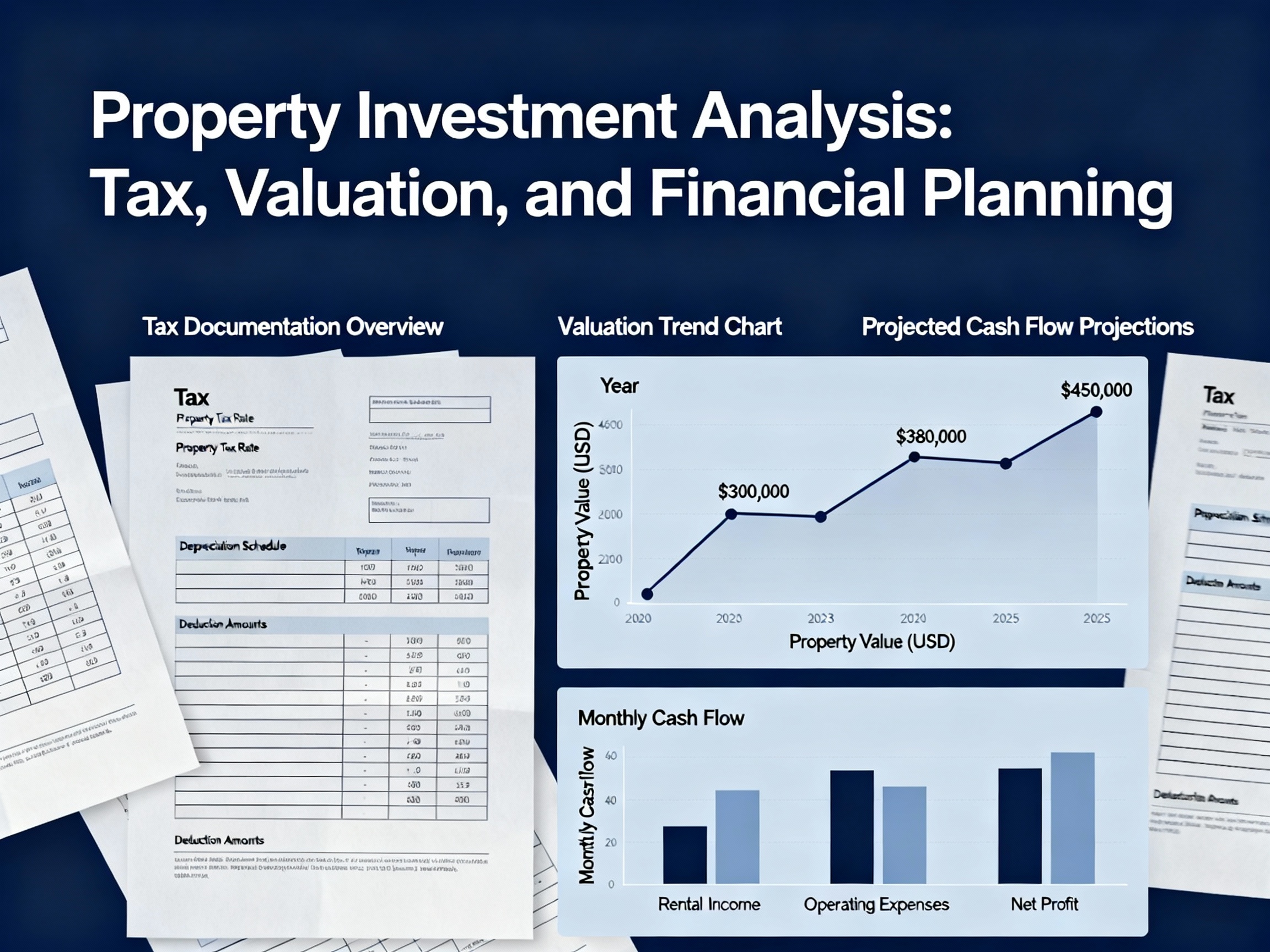
With India's economic liberalisation and increasing globalisation, the real estate sector has undergone significant transformation. The correct valuation of assets has become crucial for effective tax administration, capturing incremental urban property values, and ensuring fair treatment for all stakeholders. This comprehensive guide explores how globalisation impacts property valuation, the evolving tax regime, and what property investors and owners need to know about registered valuers and capital gains taxation.
[Finance] Capital Gains Tax
Understanding long-term capital gains taxation at flat 20% rate for individuals and how indexation rights reduce your tax liability.
[Chart] Property Valuation
Exploring different valuation methods and the role of registered valuers in ensuring accurate asset assessment for tax purposes.
[Globe] Globalisation Impact
How international standards and professional practices are reshaping India's real estate market valuation systems.
The Critical Role of Correct Asset Valuation
Asset valuation forms the foundation of modern tax systems. The correct valuation of assets contributes to effective administration of taxes and enables governments to capture incremental values that accrue in urban property. Valuation is required for multiple purposes under Indian tax law:
- Direct Taxes: Wealth Tax, Gift Tax, Capital Gains, and Cost of Construction
- Government Authority Procedures: No Objection Certificates (NOC) issued by Income Tax Department for properties offered for sale in specified cities where price exceeds prescribed limits
- Tax Recovery Cases: Determining property values during tax compliance proceedings
- Historical Reference: Previously required for Estate Duty (abolished March 16, 1985)
Key Insight: The valuation of immovable property is significantly more complex than valuation of other assets like jewellery. Property involves multiple interests—lessor, lessee, sub-lessee, mortgagor, mortgagee—each with different values that can be transferred separately.
The Role of Registered Valuers in Globalised Markets
Recognising the need for professional valuation services, the Indian government introduced institutional mechanisms to ensure objectivity and expertise in asset assessment:
Wealth Tax and Registered Valuers
The Wealth Tax Act provisions have established a system where:
- The Central Board of Direct Taxes (CBDT) appoints Registered Valuers
- Assessees can utilise their services for property valuation
- Registered Valuers provide technical assistance during appeal cases
- Previously, Approved Valuers were appointed under the Estate Duty Act
The Income Tax Department has also established departmental valuation cells to provide technical assistance to officers determining asset values for Direct Tax purposes including Wealth Tax, Gift Tax, and Capital Gains.
Important Note: With India's move towards international standards, foreign financial institutions now expect high proficiency in valuation from professional valuers. Future accountability measures will make valuers responsible for losses incurred by lending institutions due to incorrect valuations.
Valuation Rules and Amendments (April 1, 1989 onwards)
Significant reforms in property valuation came into effect from April 1, 1989, consequent to the Direct Tax Laws Amendment Act, 1989:
The Valuation Formula for Wealth Tax and Gift Tax
The method for valuing immovable property is now based on a multiple of net maintainable rent:
| Property Type | Valuation Formula | Calculation Method |
|---|---|---|
| Freehold Property | 12.5 times Net Maintainable Rent | Net rent = Gross rent minus 15% minus municipal taxes |
| Leasehold Property (Short Term) | 8 times Net Maintainable Rent | Adjusted for lease period and terms |
| Leasehold Property (Long Term) | 10 times Net Maintainable Rent | Better valuation for properties with longer lease terms |
For owner-occupied residential houses, the gross maintainable rent is determined based on:
- Municipal assessment of annual rent for owner-occupied properties
- Actual rent received or receivable (or municipal ratable value) for rented properties
Important Valuation Provisions
Several additional provisions affect property valuations:
- Frozen Values: The value once calculated remains frozen so long as ownership or occupancy does not change
- Unbuilt Area Premium: Value increases by 20-40% when unbuilt area exceeds specified area (5-20% of aggregate), but this rule does not apply if unbuilt area exceeds 20%
- Specified Area Recognition: In cities like Delhi, 60% of gross area is taken as specified area
- Professional Reports: Valuation reports furnished by Registered Valuers need not be accepted by the Valuation Officer, but help assessees escape penalties for undervaluation
Capital Gains Tax: Benefits for Long-Term Assets
One of the most significant aspects of property ownership under globalised tax regimes is the preferential treatment of long-term capital gains:
The 20% Flat Rate Benefit
Capital gains on sale of long-term assets are taxed at a flat rate of 20% for individuals and Hindu Joint Families (and 30% for firms and companies). This represents substantial tax savings compared to the progressive slab rates applicable to ordinary income.
Indexation Rights for Pre-April 1981 Properties
A major concession for property owners is the right to index property values. Properties acquired before April 1, 1981, can benefit from indexation:
- Base Cost Substitution: You can substitute market value as on April 1, 1981, instead of original cost
- Indexation Multiple: For assessment year 1996-97, the indexation multiple is 3.05 times the April 1, 1981 value
- Improvement Costs: Indexation applies to both acquisition cost and cost of improvements made
- Pre-1981 Improvements Excluded: Improvements made before April 1, 1981, are not considered for indexation
Tax Planning Opportunity: Obtaining a valuation certificate from a registered valuer for April 1, 1981 values helps in capital gains tax planning. While the valuation authority may not accept the registered valuer's report, it protects the assessee from penalties on inaccurate figures.
Specific Valuation Requirements Under Direct Tax Laws
Cost of Construction Valuation
To prevent black money circulation in construction, property owners must report construction expenses when filing income tax returns. The valuation for cost of construction differs from fair market value assessment:
- Period of Construction: Duration and phasing must be documented
- Material Quality: Specifications and quality of materials used
- Construction Method: Whether labour was engaged directly or on contract basis
- Professional Ethics: Valuers must ensure reports reflect actual investment made
Pre-emptive Purchases and Valuation Disputes
To combat undervaluation of properties and black money circulation, Chapter XX-C was introduced in the Income Tax Act:
- Government has pre-emptive right to purchase properties offered for sale with apparent undervaluation
- Applicable to properties transferred exceeding specified monetary limits (Rs. 25 lakhs to Rs. 75 lakhs in notified cities)
- Government pays consideration within three months
- Addresses widespread understatement of property values in sale deeds
The Coordination Gap: Stamp Duty vs. Income Tax Valuation
One of the major issues created by globalisation and economic liberalisation has been the lack of coordination between tax authorities and revenue departments:
The Valuation Disparity Problem
Different authorities use different valuation methodologies:
- Income Tax Department: Uses specific methods for tax purposes
- State Sub-Registrars: Determine values for stamp duty assessment
- Local Bodies: Apply property tax based on annual rental value
- Result: Wide disparity in valuations for the same property
This lack of coordination enables:
- Black money generation through systematic undervaluation
- Stamp duty evasion by understating property values
- Capital gains tax avoidance through under-reporting
- Loss of tax revenue to the government
Reform Recommendation: The maximum combined rates of all tax levels should be brought down together with uniform valuation standards. Stamp duties and registration fees constitute significant state revenue (30-70% of municipal revenue), making coordination essential.
How Globalisation is Reshaping Property Valuation Standards
With India's economic liberalisation, international real estate companies have entered the market, bringing new standards and practices:
International Best Practices Being Adopted
- Institutional Financial Standards: Rigorous standards comparable to those in London for construction, architecture, and maintenance
- Professional Accountability: Foreign institutions expect high proficiency and will hold valuers accountable for losses
- Comprehensive Services: Property management and maintenance under professional oversight, not cooperative societies
- Ethical Standards: International companies charge brokerage fees from one side only (whom they represent), unlike traditional Indian practices
- Advanced Valuation Techniques: Use of multiple methods including income capitalisation, comparable sales, development approach, etc.
The Need for a Central Valuation Authority
India currently lacks an equivalent to the UK's Inland Revenue Department valuation office, a publicly recognised organisation for ascertaining land values for all government purposes. This gap results in:
- Non-uniform procedures adopted by various departments
- Different methods followed by different authorities
- Inconsistencies and irrational calculation methods
- Loss of revenue to the exchequer
- Avoidable hardships for law-abiding citizens
| Valuation Method | Primary Use | Advantages |
|---|---|---|
| Land and Building Method | Mixed-use properties | Separates land and structure values |
| Income Capitalisation Method | Rental properties | Based on earning potential |
| Comparable Sale Instances | Market value assessment | Market-based, current data |
| Profit and Loss Method | Commercial properties | Business performance-based |
| Development Method | Development sites | Future potential-based |
Reforming Property Tax: Capital Value vs. Annual Rental Value
Currently, property tax assessment by local bodies is based on annual rental value. However, this formula, developed decades ago, no longer reflects property realities:
The Outdated Annual Rental Value System
- Original Logic: Was practical when land and construction costs did not vary significantly
- Modern Reality: Land costs have increased 100+ times; building costs 10+ times
- Result: Formula produces distorted and unrealistic assessments
- Recommendation: Should be based on Capital Value instead
Why Capital Value is Superior
Basing property tax on capital value would:
- Reflect true property market value
- Calculate values based on land and building costs more accurately
- Enable better tax collection and equity
- Reduce confusion and disputes with taxpayers
Acts and Regulations Affecting Property Valuation
Multiple legislative acts impact property valuations and create the framework within which valuers must work:
- Limitation Act - Sets time limits for government action on unauthorized construction (3 years)
- Specific Relief Act - Governs relief in property-related suits
- Transfer of Property Act - Defines property transfer mechanisms and rights
- Indian Contract Act - Governs property sale agreements and contracts
- Registration Act - Mandates property registration and documentation
- Urban Land Ceiling and Regulation Act - Controls vacant land in urban areas
- Town and Country Planning Act - Sets development control rules
- Apartment Act - Governs multi-unit residential properties
- Land Acquisition Act - Determines compensation for acquired land
- Chapter XX-C Income Tax Act - Addresses undervalued property acquisitions
- Rent Control Act - Regulates rental and fair rent determination
Best Practices for Property Owners and Investors
When Dealing with Property Valuation
- Obtain Professional Valuations: Use registered valuers for all valuations to ensure legal protection and tax compliance
- Document Everything: Maintain records of construction costs, improvements, and purchase documentation
- Understand Your Rights: Know about indexation benefits, capital gains exemptions, and other tax advantages available
- Keep Records of April 1981 Values: For properties held long-term, maintain documentation or obtain valuation for indexation purposes
- Coordinate Across Authorities: Ensure consistency when dealing with income tax, stamp duty, and local body valuations
- Comply with Documentation: Ensure all transaction documents accurately reflect true consideration to avoid penalties
Expert Property Valuation and Investment Advice
Understanding property valuation is critical for maximising your real estate investments. Our team of experienced professionals specialises in property valuation, capital gains tax planning, and investment advisory services aligned with international standards.
Get Expert ConsultationConclusion: Navigating the Globalised Real Estate Market
Globalisation has brought significant changes to India's real estate market, introducing international standards and professional practices for property valuation. With the emergence of registered valuers, reformed tax laws, and indexation benefits, property owners and investors now have robust mechanisms to ensure fair valuation and optimal tax treatment.
However, the lack of centralised valuation authority and coordination among different government departments remains a challenge. Property owners must be proactive in obtaining professional valuations, understanding tax benefits, and maintaining comprehensive documentation to protect their interests.
For those investing in real estate or holding long-term properties, understanding capital gains taxation, indexation rights, and valuation methods is essential for maximising returns. By working with registered valuers and staying compliant with tax regulations, property owners can navigate the globalised real estate landscape effectively and make informed investment decisions.