
Introduction
You're about to make the biggest financial decision of your life—buying property. Did you know that 73% of property buyers regret their location choice within 5 years? Ancient Vastu Shastra identified 16 critical factors for site selection that modern real estate science now validates. This guide reveals the timeless principles that wealthy investors use when selecting property—principles ignored by average buyers.
The Science Behind Vastu Site Selection
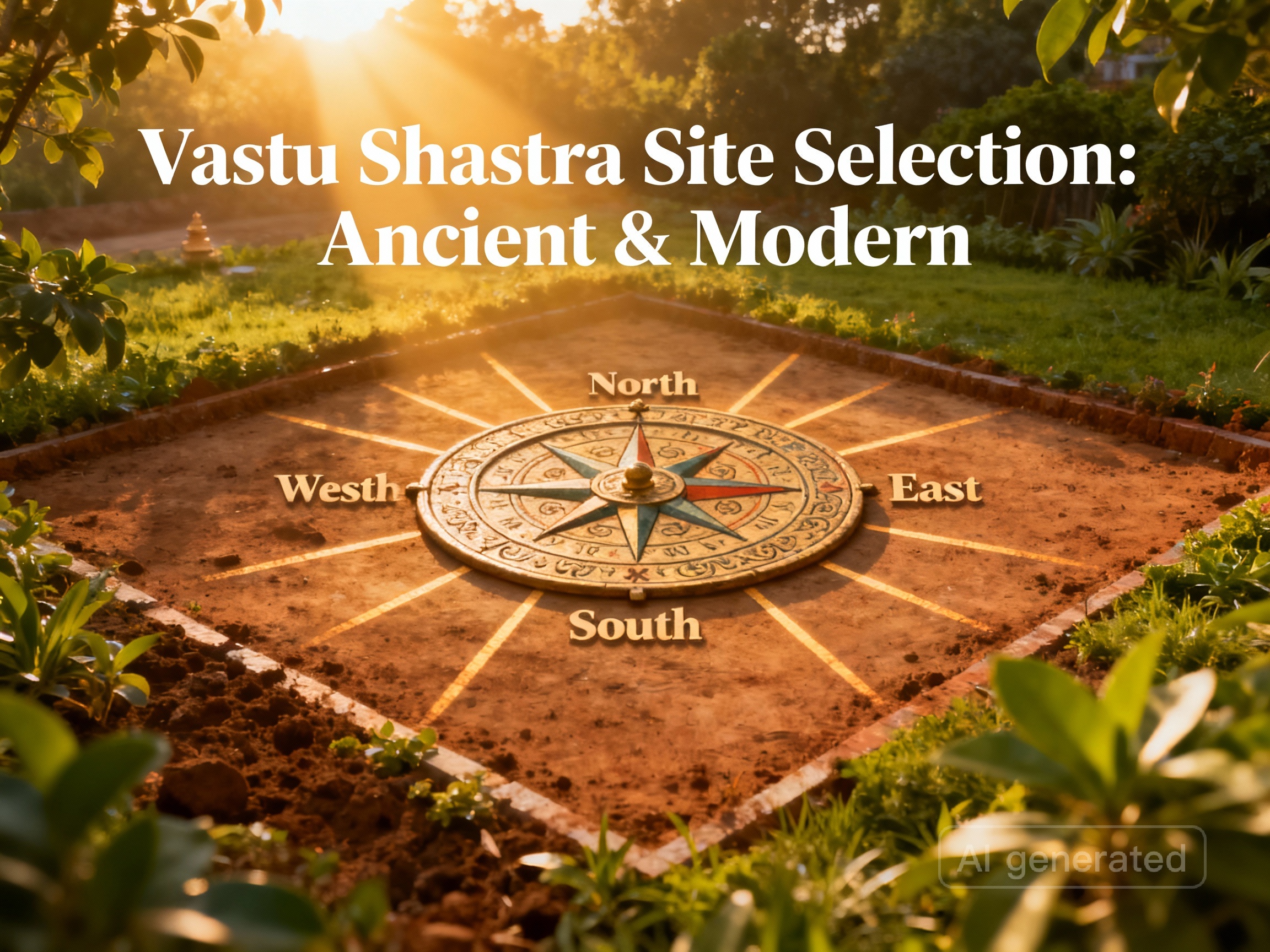
Vastu Shastra, an ancient building science with roots in Indian astrology, views the earth and cosmos as interconnected. The principles revolve around eight directional deities who influence different aspects of life and prosperity when correctly aligned with a house site.
- North (Kubera): God of wealth, open space here attracts financial prosperity.
- Northeast (Eswara): Governs health and spirituality, a well-lit, open northeast is highly auspicious.
- East (Indira): Associated with wealth and happiness.
- Southeast (Agni): The fire god, usually associated with the kitchen direction.
- South (Yama): Links to strength and protection.
- Southwest (Nirudhi): Related to stability and long-term wealth.
- West (Varuna): God of rain and water, linked to calmness and wealth.
- Northwest (Vayu): God of wind, influences social status.
Modern real estate assessments align with these principles, recognizing that factors such as sunlight exposure (east and northeast), ventilation (northwest), and site elevation affect property value and livability.
The 9-Part Site Division System
A traditional Vastu technique divides the site into nine equal sections, each ruled by different deities affecting various life aspects:
| Sector | Traditional Name | Modern Interpretation | Effect on Owner |
|---|---|---|---|
| Center | Brahma Sthana | Community amenities, calmness | Overall prosperity and peace |
| Northeast | Eesaniya | Spiritual energy, healthy environment | Health and longevity |
| Northwest | Vaayu | Airflow and ventilation | Social status and recognition |
| North | Kubera | Wealth and financial growth | Wealth and happiness |
| West | Varuna | Water elements and tranquility | Peace of mind and prosperity |
| Southeast | Agni | Fire element, kitchen placement | Stability and family health |
| South | Yama | Death and transition | Strength and wisdom |
| Southwest | Nirudhi | Stability and grounding | Longevity and wealth retention |
| East | Indira | Dawn light and wealth | Happiness and success |
The goal is to maximize open spaces and beneficial features in the north and east while maintaining stability with well-defined boundaries in the south and west.
Nine Practical Site Evaluation Tests
- Refilling Test: Dig a pit and refill the excavated soil without compaction. If excess soil remains, it indicates dense, strong soil ideal for foundation.
- Water Retention Test: Fill a trench in the northeast corner with water overnight. If water remains unmarred, the site is auspicious and healthy.
- Flower Float Test: Place a fragrant flower on the water surface; if it floats clockwise, positive energy flows through the site.
- Paddy Sprout Test: Sow a small quantity of paddy and water; sprouting by the third day indicates fertile soil.
- Soil Color & Texture: Light yellow, sandy soil is ideal; dark or black soils often indicate poor health and financial issues.
- Land Leveling: The site’s south and west parts should be slightly higher than north and east.
- Shape and Size: Preferably square or rectangular; triangular or irregular plots are less auspicious.
- Neighbor Analysis: Sites adjacent to land purchased from prosperous owners and those on the north or east side are better.
- Environmental Noise and Odor: Absence of foul smells or noisy traffic indicates a good site.
Modern Site Selection Checklist
- Square/rectangular plot shape.
- Higher elevation on southwest and south parts, lower northeast.
- Soil density confirmed by refilling test.
- Northeast water retention and flower float test positive.
- Exposure to sunlight: 3 hours post-sunrise on east/northeast.
- No triangular, circular, or hexagonal shapes.
- Well ventilated with natural airflow.
- Proximity to amenities (schools, hospitals, transportation).
- Legal compliance, good title history.
- Good neighborhood reputation, low pollution and noise.
- No negative environmental factors (foul smells, nearby cemeteries).
- Avoid sites with history of bad energy (ruined houses, court auctions).
- Check for adjacency to protective natural features or auspicious neighboring properties.
Conclusion: Apply Ancient Wisdom for Modern Success
The most successful property investors systematically apply these ancient site selection principles validated by modern sciences of soil testing, environmental assessment, and market evaluation. A property chosen in alignment with these factors tends to enjoy better appreciation, reduced maintenance costs, harmonious living, and overall prosperity.
Before your next property investment or building site selection, integrate these 16 astrological and architectural criteria into your walk-through checklist. Doing so will save you costly mistakes and set the foundation not only for a sturdy building but also for a prosperous life.